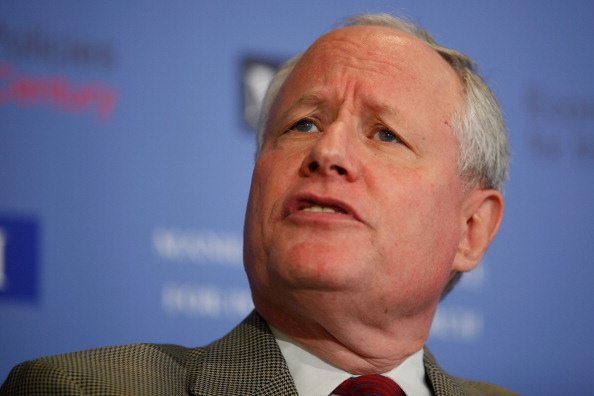
William Kristol Net Worth: Why Details Remain Undisclosed
In an era where public figures' financial details are often a subject of intense scrutiny and widespread speculation, the personal wealth of prominent political commentators like William Kristol frequently becomes a topic of interest. As a seasoned conservative intellectual, founder of The Weekly Standard, and a familiar face across various news channels, many are curious about William Kristol's net worth. However, unlike many celebrities or corporate executives, concrete and widely accepted figures detailing his complete financial standing remain remarkably elusive. This article delves into the reasons behind this informational void, exploring the nuances of public financial disclosures for non-elected figures and what we can infer about the financial landscape of a career spanning decades in media, politics, and think tanks.
The Elusive Figure: Why William Kristol's Net Worth Remains a Mystery
The quest for a definitive "William Kristol net worth" figure often leads to a dead end, a phenomenon not uncommon for individuals in his particular professional sphere. There are several key reasons why such details are not readily available to the public:
- Not an Elected Official: Unlike presidents, senators, or other high-ranking government officials who are required to file detailed financial disclosure reports, Kristol has primarily operated in the private sector through media, academia, and non-profit organizations. These roles do not typically mandate public reporting of personal assets, liabilities, or income.
- Not a CEO of a Publicly Traded Company: Figures like John Stumpf, whose net worth is often publicly estimated due to his leadership of Wells Fargo, operate under different financial transparency requirements. Kristol's ventures, while influential, haven't placed him in a position that necessitates SEC filings or similar corporate disclosures that shed light on personal wealth.
- Focus on Commentary, Not Commerce: While Kristol has been a highly compensated individual throughout his career, his public persona and influence stem from his intellectual contributions and political commentary, not from business dealings or celebrity endorsements that often generate public financial speculation.
- Privacy Considerations: Many individuals, especially those not obligated to disclose, prefer to keep their personal finances private. Unless there's a specific legal or professional requirement, there's no impetus for Kristol or his representatives to publish these figures.
This situation highlights a fundamental difference between various types of public figures. While a pop star's album sales or an athlete's contract might be public knowledge, the accumulated wealth of an influential political intellectual often stays firmly in the private domain.
Distinguishing Income from Wealth: What We Know and What We Don't
It's crucial to differentiate between an individual's income—the money they earn over a period—and their net worth—the total value of all their assets minus their liabilities. For William Kristol, we can infer a great deal about his income streams over the years, which likely allowed for significant wealth accumulation. However, these income figures are not direct indicators of his current net worth.
Net worth comprises a complex array of assets: real estate, investments (stocks, bonds, mutual funds), retirement accounts, cash, and other valuable possessions, offset by debts like mortgages or loans. Without access to these detailed financial records, any precise net worth figure would be purely speculative. The information void surrounding his financial specifics is a recurring theme for those Searching for William Kristol's Net Worth: An Info Void?.
Tracing William Kristol's Career: Potential Income Streams and Financial Footprint
To understand the potential scope of William Kristol's financial standing, it's helpful to examine his extensive and impactful career. Born into a family deeply embedded in intellectual and political circles (his parents, Irving Kristol and Gertrude Himmelfarb, were prominent intellectuals), Kristol carved his own path, ascending through various influential positions. Each role undoubtedly contributed to his financial well-being, though the specific compensation for each remains largely private.
- Academia and Think Tanks: Early in his career, Kristol held positions at prestigious institutions, including teaching at the University of Pennsylvania and Harvard University's Kennedy School of Government. He also served as a fellow at the American Enterprise Institute (AEI), a well-regarded conservative think tank. These roles typically command competitive salaries, often supplemented by research grants or speaking engagements.
- Political Advisor: Kristol served in various capacities during Republican administrations, notably as Chief of Staff to Vice President Dan Quayle during the George H.W. Bush administration. High-level political positions in Washington, D.C., come with substantial government salaries, though again, these are not usually in the league of corporate executive compensation.
- Founding and Editing The Weekly Standard: Perhaps his most significant professional endeavor was co-founding and serving as editor-at-large of The Weekly Standard, a highly influential conservative political magazine, from 1995 until its closure in 2018. As a founder and editor of a prominent national publication, Kristol would have commanded a significant salary. Depending on the magazine's ownership structure, he might also have held equity that could have contributed to his wealth upon sale or other financial events.
- Media Punditry and Commentary: Kristol has been a ubiquitous presence on television news, appearing as a political analyst and commentator for networks like Fox News, ABC News, and MSNBC. Such contracts for seasoned pundits can be quite lucrative, often involving annual retainers, appearance fees, and potential talent deals. He has also been a prolific op-ed contributor for various national publications.
- Authorship and Speaking Engagements: Like many public intellectuals, Kristol has authored or co-authored books, which generate income through advances and royalties. Additionally, he is a sought-after speaker on conservative politics and current events, and speaking fees for individuals of his stature can range from thousands to tens of thousands of dollars per engagement.
- Leadership of Political Organizations: In recent years, particularly in his capacity as a leading figure in the "Never Trump" conservative movement, Kristol has been involved with organizations like Defending Democracy Together and its projects like Republicans for the Rule of Law and Principles First. Leaders of such non-profits often receive competitive salaries commensurate with their experience and the organization's funding.
The Weekly Standard Era: A Significant Chapter
The two-decade run of The Weekly Standard under Kristol's leadership was a defining period of his career. As a major voice in conservative thought, the magazine attracted significant advertising revenue and subscriptions, backed by Rupert Murdoch's News Corp initially. While the exact financial terms of Kristol's compensation or any equity stake he held are not public, it's reasonable to assume that this period represented a substantial income stream and potentially a significant asset. The magazine's eventual sale by News Corp to Anschutz Corp. in 2009, and its closure in 2018, would have had financial implications, whether through a buyout, severance, or the termination of a high-paying editorial role.
Post-Weekly Standard and Anti-Trump Activism
Following the closure of The Weekly Standard, Kristol remained highly active, pivoting to digital media and intensifying his role as a critic of Donald Trump within the conservative movement. His continued visibility, through outlets like The Bulwark and various media appearances, suggests a sustained income from punditry, writing, and leadership roles in new organizations. These endeavors, while influential, do not typically come with public financial disclosures that would reveal a comprehensive net worth.
The Broader Context: Privacy, Public Scrutiny, and Estimating Wealth
The absence of a clear "William Kristol net worth" figure is not unique to him. Many influential individuals who are not in elected office or leading major publicly traded corporations maintain a high degree of privacy regarding their personal finances. Unlike the detailed profiles provided for figures like Katrina Pierson (whose public affiliations make some financial aspects more discernible) or high-profile CEOs, Kristol's career trajectory places him in a different category. Celebrity net worth sites often rely on publicly available data points such as property records, known salaries for specific roles (e.g., government positions), and published book advances. For Kristol, while some of these elements might exist, they don't form a complete picture sufficient for a reliable net worth calculation.
It's also important to consider the ethical implications of speculating wildly on someone's private wealth without concrete data. Financial transparency is a goal for many, especially regarding public servants or those seeking public trust. However, for a private citizen, privacy often takes precedence. As such, any attempts to definitively state William Kristol's net worth would be speculative at best, and misleading at worst. This is why for detailed insights, one might find themselves reviewing William Kristol's Wealth: What the Available Data Doesn't Reveal.
What We Can Infer (And What We Can't)
Based on his long and distinguished career, it is reasonable to infer that William Kristol has accumulated significant wealth. His consistent presence at the top tiers of political commentary, publishing, and intellectual discourse over several decades points to a professional life characterized by high-earning positions. He has likely enjoyed substantial salaries from editorial roles, significant media contracts, speaking fees, and potentially book advances and other remunerations. These income streams, managed prudently, would undoubtedly lead to a comfortable and perhaps affluent financial standing.
However, what we absolutely cannot do is assign a specific numerical value to his net worth. Without access to his investment portfolios, real estate holdings, or debt obligations, any number would be a mere guess. The absence of this data means that while we can appreciate his professional success and assume a certain level of financial stability, the precise details of William Kristol's net worth remain undisclosed and largely unknowable to the public.
In conclusion, the interest in William Kristol's net worth is a natural extension of his long and influential public career. Yet, the very nature of his professional roles—primarily as a political commentator, editor, and intellectual rather than an elected official or a corporate CEO—means that comprehensive financial disclosures are neither required nor typically provided. While his impressive career trajectory strongly suggests a financially comfortable life, concrete figures detailing his precise net worth are simply not available. For individuals like Kristol, professional influence and intellectual contributions often supersede, and obscure, the specifics of personal financial details in the public consciousness.
